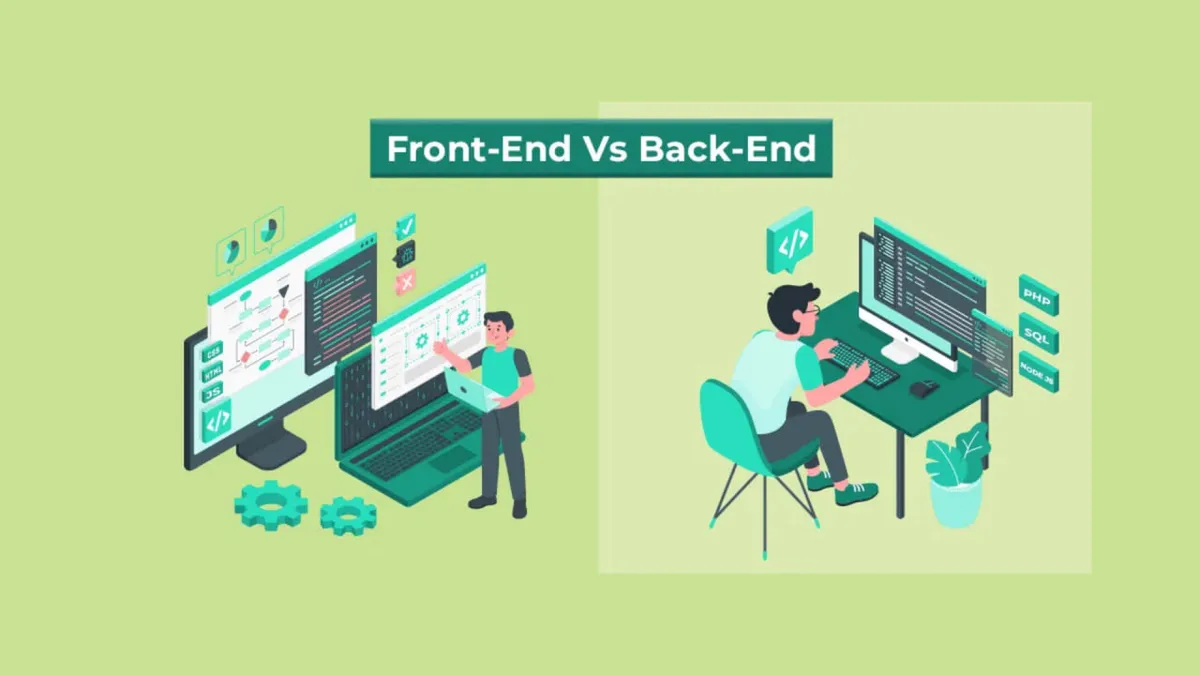

Introduction to Front-End and Back-End Development
When we use websites or mobile apps, we usually think about how they look and how easy they are to use. What we don’t always see is the complex system working behind the scenes to make everything run smoothly. This is where front-end and back-end development come together. These two areas form the foundation of modern web applications, each with its own role, tools, and focus.
Understanding the difference between front-end and back-end development is important for anyone interested in web development or working in tech. In this article, we’ll explore what each role involves, the technologies they use, and how they collaborate to bring great digital experiences to life.
1. What Is Front-End Development?
Front-end development is all about what users see and interact with. It’s the visible side of a website or application—the layout, colors, buttons, animations, and overall user experience. You can think of it as the “face” of the website.
Front-end developers use HTML to structure content, CSS to style it, and JavaScript to add interactivity. Their goal is to make sure everything not only looks good but also feels smooth, intuitive, and responsive. Popular frameworks like React, Vue, and Angular help speed up development and make complex interfaces easier to manage.
2. The Role of User Experience (UX)
A major responsibility of front-end developers is creating a great user experience (UX). No matter how powerful an app is behind the scenes, users won’t enjoy it if it’s confusing or hard to navigate.
Front-end developers focus on:
- Clear layouts and readable designs
- Easy navigation
- Smooth interactions
- Quick load times
Their work ensures that users can accomplish their goals effortlessly and enjoy the process along the way.
3. What Is Back-End Development?
If the front end is what users see, the back end is what keeps everything running. Back-end development handles all the things happening behind the scenes—the server, databases, application logic, and security.
Back-end developers work with programming languages like Python, Java, PHP, Ruby, or Node.js to process data, manage user accounts, handle requests, and connect the front end to databases. Frameworks such as Django, Express, Ruby on Rails, and Spring provide tools to help build secure and efficient systems faster.
4. Data and Database Management
One of the key responsibilities of back-end developers is managing data. This includes:
- Storing information securely
- Retrieving and updating records efficiently
- Ensuring backups and data integrity
They work with databases such as MySQL, PostgreSQL, or MongoDB, and design systems that can handle large amounts of traffic and information without slowing down or crashing.
5. Front-End vs Back-End Technologies
Front-End Technologies
Front-end development centers on:
- HTML – structuring content
- CSS – styling and layout
- JavaScript – interactivity and animations
These tools create responsive, attractive, and dynamic user interfaces that adapt to different screen sizes and devices.
Back-End Technologies
Back-end development uses:
- Languages like Python, Java, Ruby, PHP, and Node.js
- Frameworks like Flask, Django, Rails, Spring, and Express
- Databases such as SQL or NoSQL systems
These technologies handle authentication, business logic, data processing, and communication with the front end.
6. UI Design and Performance on the Front End
Front-end work also includes translating designs into functional interfaces. Developers build designs provided by UI/UX designers into working code, ensuring:
- Visual consistency
- Responsiveness for mobile and tablets
- Accessibility for all users
They also optimize performance by compressing images, minimizing scripts, using caching strategies, and ensuring pages load as quickly as possible.
7. Server-Side Logic and APIs in the Back End
On the server side, back-end developers write the logic that controls how data flows through the application. This includes:
- User authentication and security
- Input validation
- Business rules and workflows
- Payment processing and data tracking
They also build APIs (Application Programming Interfaces)—the bridge that allows the front end to communicate with the back end and with third-party services such as payment systems, maps, or social media platforms.
8. Collaboration Between Front-End and Back-End Developers
Front-end and back-end developers work hand in hand to create complete applications. Good communication is essential to make sure designs match functionality and data flows correctly between the two sides.
Communication and Workflow
Teams collaborate through:
- Regular meetings and design reviews
- Shared documentation
- Agile development methods with feedback loops
This ensures faster development and fewer misunderstandings.
Version Control and Project Management
Tools like Git allow developers to collaborate on the same codebase without conflicts. Branching, merging, and pull requests help teams manage changes smoothly.
Project managers coordinate the efforts of both teams to keep timelines, requirements, and priorities aligned—making sure the final product is delivered on time and meets expectations.
9. Conclusion: The Power of Collaboration
Front-end and back-end development may focus on different aspects of web creation, but they are deeply interconnected. Front-end developers bring creativity and user-focused design to life, while back-end developers power those experiences with strong logic, secure systems, and reliable data handling.
When these two disciplines work together effectively, the result is a seamless, engaging, and fully functional web application. The true magic of development happens not in isolation—but through collaboration, communication, and shared problem-solving.
FAQ
1. What’s the main difference between front-end and back-end development?
Front-end focuses on what users see and interact with (design, layout, animations), while back-end manages what happens behind the scenes (servers, databases, logic, and security).
2. Can one person work in both areas?
Yes. Developers skilled in both are called full-stack developers. However, because each area involves many tools and concepts, most developers specialize in one.
3. How do front-end and back-end developers work together?
They collaborate closely through regular communication, shared version control systems like Git, and project management tools to align design with functionality.
4. Are both equally important?
Absolutely. A beautiful interface means nothing without a powerful back end, and a strong back end won’t matter if users can’t interact with it comfortably. Both are essential for building successful applications.